
Electrical safety is a critical responsibility across many New Zealand workplaces, from construction sites and factories to offices, schools, and hospitality venues. One of the most common questions asked by people considering test and tag training is: what accreditation do you actually receive once you complete the course?
This guide explains, in plain terms, what certification you receive after test and tag training in New Zealand, how it is recognised, and what it means for your ability to carry out testing safely and legally.
Understanding Test and Tag Accreditation in New Zealand
Unlike some trades or formal qualifications, test and tag training in New Zealand is not an NZQA-registered qualification. This often causes confusion for trainees who expect a nationally issued certificate or licence.
Test and tag training are different from training in general, and they are conducted on the basis of a competency model. So, when you finish your training and assessment successfully, you are considered a “competent person” according to the derivate electrical safety standards and guidelines.
The method is approved by a great number of industries and corresponds to the way the testing of electrical appliances is done in actual workplaces.
What Certificate Do You Receive After Training?
After completing a recognised test and tag course, you will typically receive a Certificate of Competency. This certificate confirms that:
- You have completed formal training in electrical appliance testing
- You understand how to inspect, test, and tag equipment correctly
- You have demonstrated practical competence during assessment
- You are able to carry out testing in line with current safety standards
Employers, site managers, and clients use this certificate as evidence that you are trained and authorised to perform test and tag duties.
It is important to note that this certificate is issued by the training provider, not a government body. However, reputable providers follow strict assessment processes to ensure their certification is valid and trusted across industry.

Photo ID Licence Cards – Why They Matter
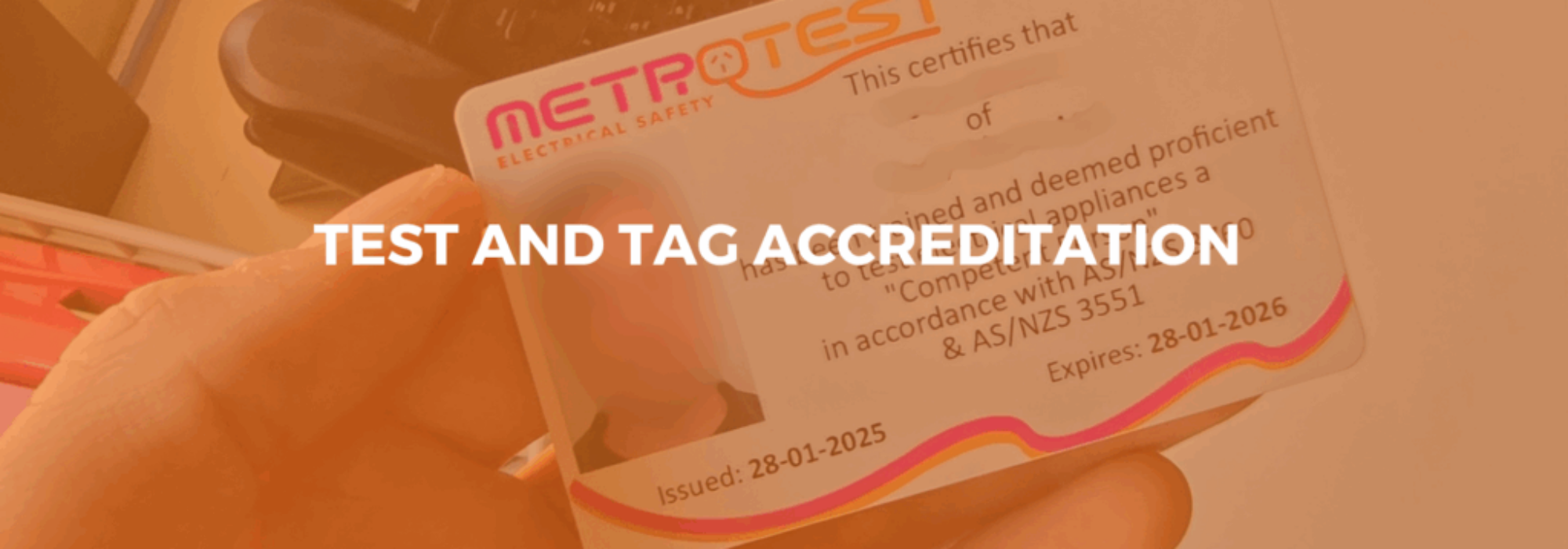
In addition to a certificate, many professional training providers also issue a photo ID licence card. While not legally mandatory, this card is highly recommended and widely accepted on job sites.
A photo ID card provides instant proof that:
- You are the person named on the certificate
- You have completed recognised training
- Your competency is current and traceable
In practical terms, this makes life much easier when working on construction sites, commercial facilities, or client premises where proof of competency is required before work begins.
Many employers and health and safety officers prefer a photo ID card over a paper certificate alone, as it is quick to verify and harder to misuse.
Is Test and Tag Accreditation Legally Recognised?
Test and tag training aligns with AS/NZS 3760, the standard that outlines the inspection and testing of electrical equipment. While the standard itself does not “license” individuals, it requires that testing be carried out by a competent person.
By completing recognised training and receiving certification, you are meeting this competency requirement.
In other words, your accreditation is recognised because:
- It demonstrates competency
- It follows the correct standard
- It is accepted by employers, insurers, and safety auditors
This is why test and tag certification is widely used across New Zealand workplaces despite not being a formal national qualification.
How Long Is Test and Tag Certification Valid?
Generally, valid periods for most test and tag certifications vary from two to three years and are subject to a provider and level of the course. It is highly recommended that refresher training be undertaken upon expiry of this time period.
One should keep in mind that electrical standards, testing equipment, and work environment requirements can still change regardless of the time elapsed.
- Stay compliant with current best practice
- Maintain confidence in your testing process
- Continue to meet employer and client expectations
Many organisations require refresher certification as part of their internal safety policies.

Does Accreditation Allow You to Work Independently?
Yes — once certified as a competent person, you are generally permitted to carry out test and tag work within the scope of your training.
However, your level of responsibility may depend on:
- Your employer’s policies
- The type of equipment being tested
- The environment you are working in (e.g. construction vs office)
Some advanced or specialised equipment may require additional training, which is why many providers offer multiple course levels.
Choosing the Right Training Provider
Not all test and tag courses are equal. When choosing a provider, it’s important to ensure they offer:
- Practical assessment (not theory-only)
- Certification aligned with AS/NZS 3760
- Clear documentation and traceability
- Optional photo ID licensing
A reputable provider will also clearly explain what their certification means and how it is recognised in the workplace.
Final Thoughts
Even though test and tag training in New Zealand is not formally associated with a national qualification, the accreditation you get is definitely not without its worth. A valid Certificate of Competency along with a photo ID licence card, is evidence that can be relied on to show that testing of electrical appliances in a safe and proper manner is within your capability.
For employers and clients, this accreditation represents confidence, compliance, and a commitment to workplace safety.
Start Your Test and Tag Certification Today
If you’re looking to gain recognised test and tag certification or refresh your existing competency, choose a training provider that delivers practical, industry-aligned courses.
Contact Metrotest today to find the right course for your needs and take the next step toward electrical safety compliance.
